 Stroke
"We'd tried two group lessons. Both times she sat on the steps and cried. I genuinely thought she'd be one of those people who just never learns. Then we did week one with the instructor and she put her face in the water on her own. I sobbed behind my sunglasses."
Sunita R.
Mother of Priya, age 7 · Suburbs of Austin, TX
Building trust before technique
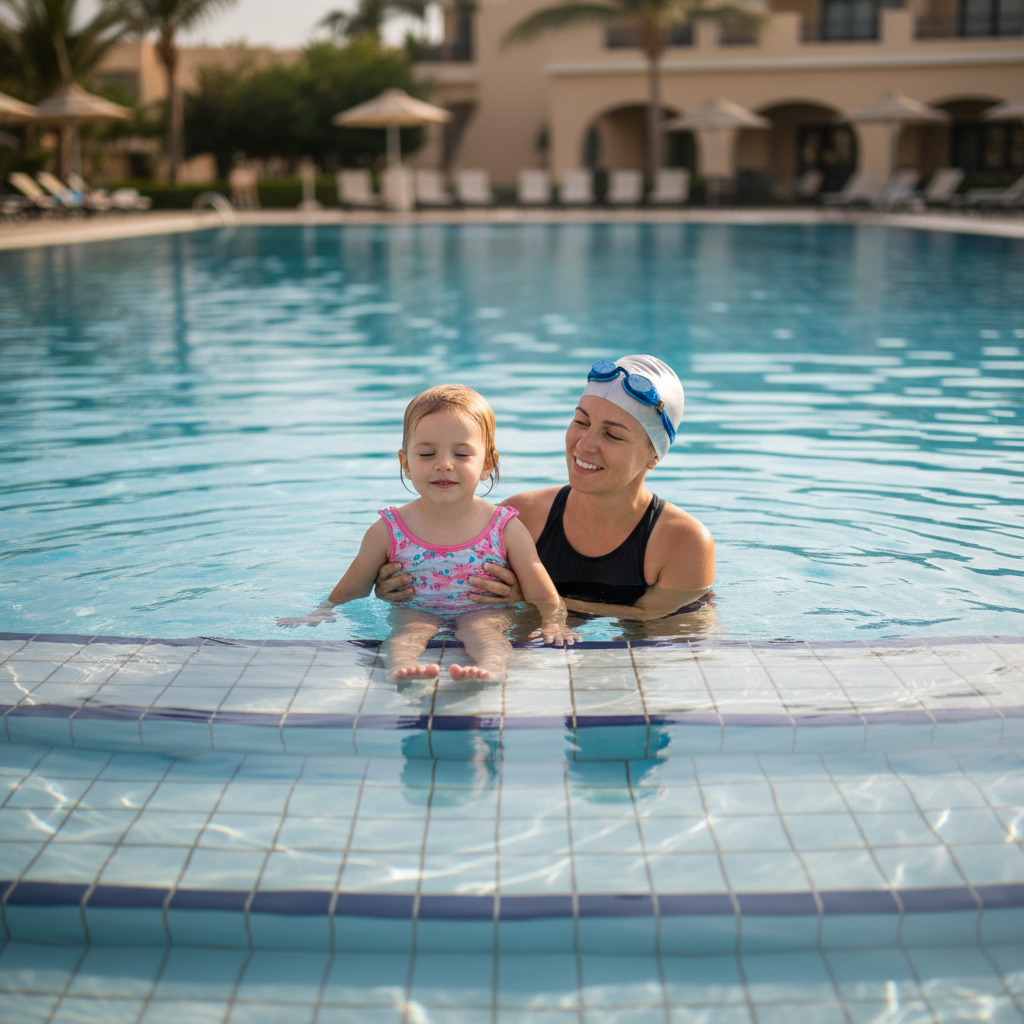
No child learns to swim before they feel safe. Week one is entirely about sensory comfort — removing the fear response so the body can actually absorb instruction.
- Seated step work — no standing, no rushing
- Voluntary face submersion at the swimmer's own pace
- Water pouring and breath-holding games
- Establishing eye contact and verbal trust signals
"My son Marcus is eleven. He failed group lessons three times. The instructors were kind but there were eight kids and Marcus just fell through the cracks. After one session here I understood what he'd been missing — someone actually watching him."
Darnell W.
Father of Marcus, age 11 · Suburbs of Atlanta, GA
The back float breakthrough
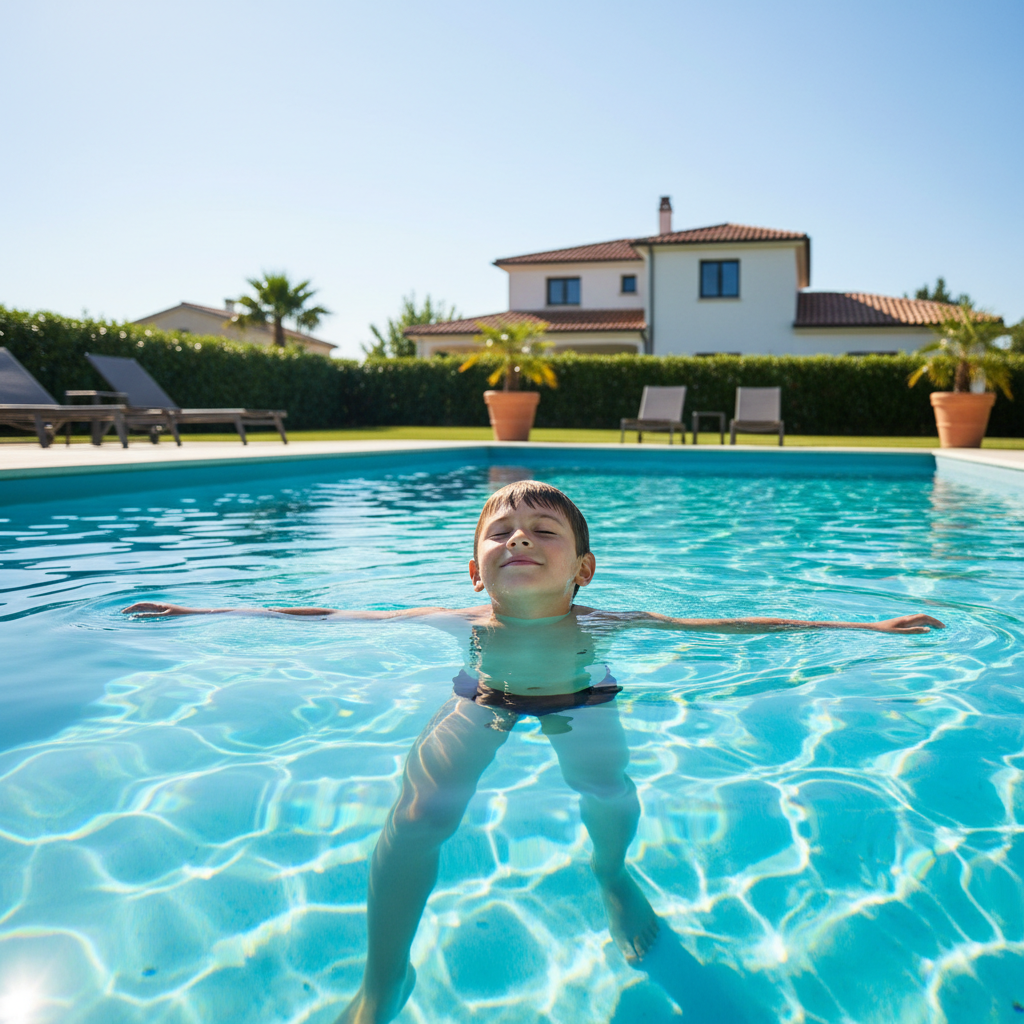
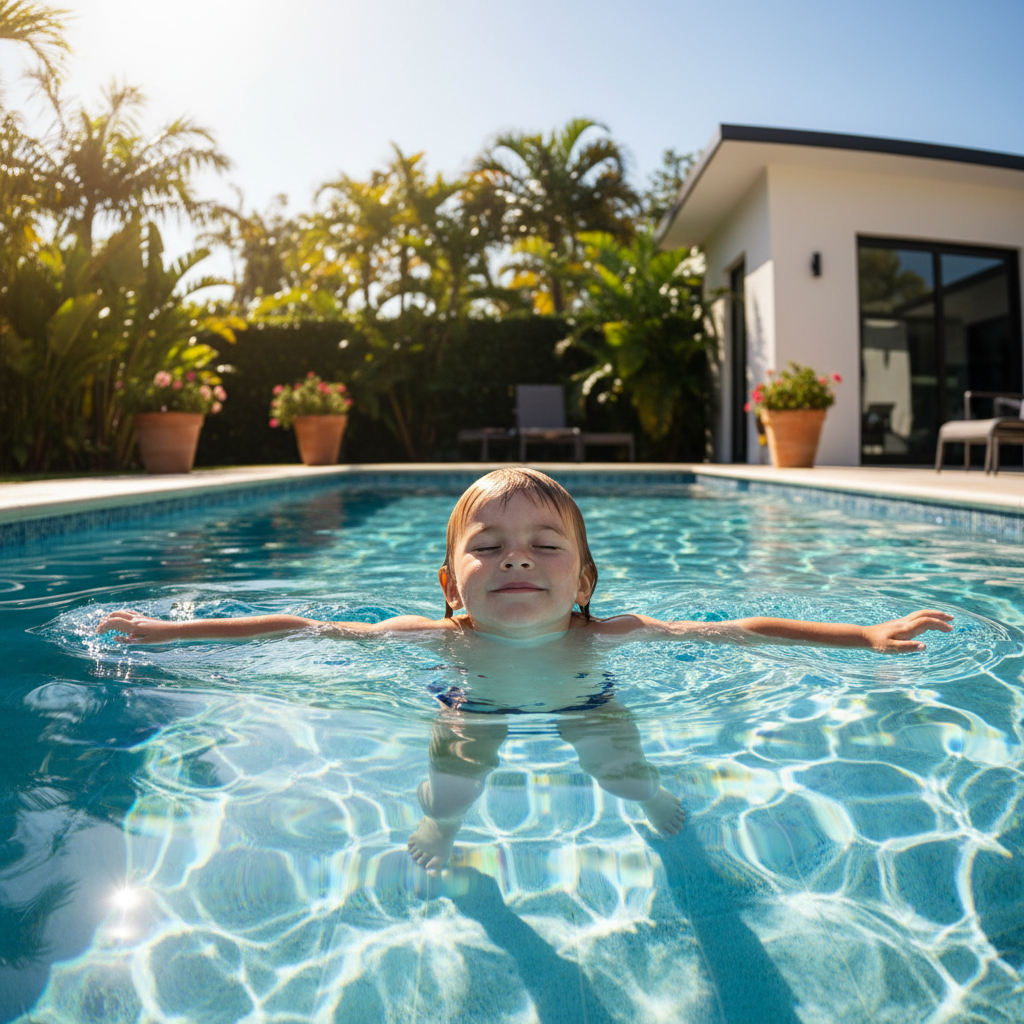
The back float is the most psychologically difficult skill in swimming — it requires complete surrender of control. We approach it in three stages over two weeks.
- Supported float with two-hand hold, then one-hand
- Ear submersion desensitization
- Neck release technique — removing the "head-lifting" reflex
- Breath timing: inhale to rise, exhale to stay
"I'm forty-three. I've been afraid of water that's over my head since I was eight years old. I told myself it was fine, I'd just never swim. My daughter started lessons and I watched from the deck and something broke open in me."
Patricia L.
Adult learner, age 43 · Suburbs of Portland, OR
Rebuilding what fear rewired
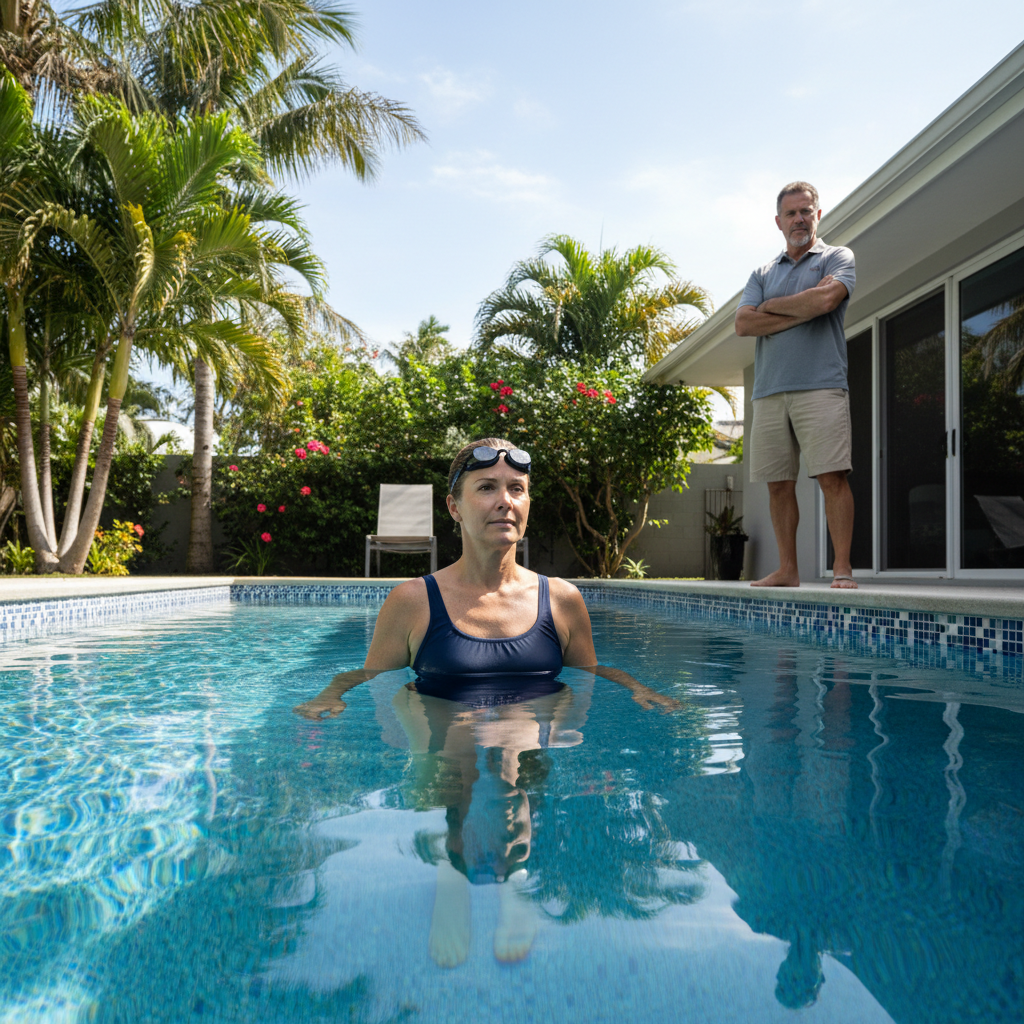
Adult fear of water is physiological, not rational. The adult program pairs technical skill-building with explicit explanation of what the body is experiencing — removing the mystery that feeds anxiety.
- Full verbal explanation of buoyancy physics before entering water
- Panic response identification and reset drills
- Incremental depth progression — never past comfort
- Breath control as anxiety management, not just technique
"Both my twins started at the same time. Jada took to it immediately. Jaylen fought it for three weeks. I was worried we'd have to stop. The instructor said 'give him one more session' every single time. Week four he swam across the pool and didn't stop to check if anyone was watching."
Keisha T.
Mother of Jada & Jaylen, age 8 · Suburbs of Dallas, TX
The wall release moment
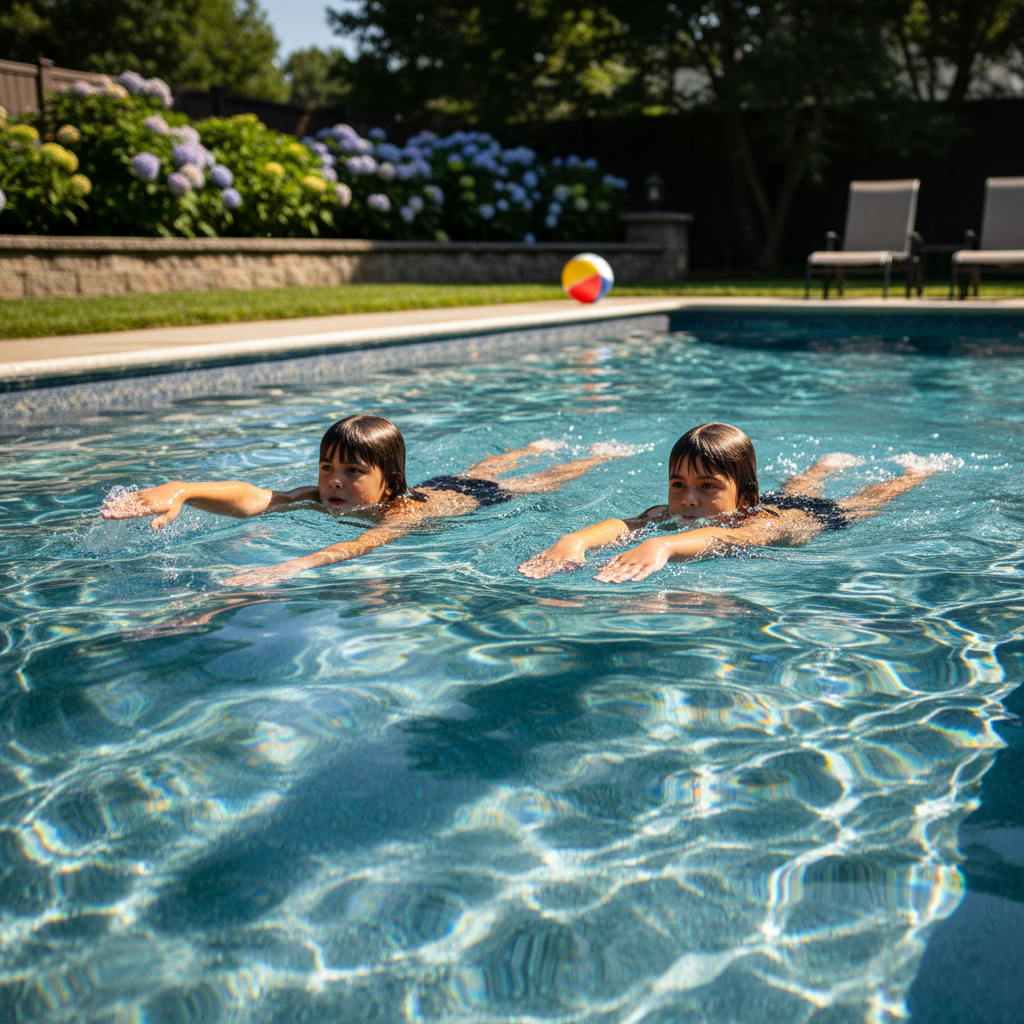
Releasing the wall is the psychological inflection point of learning to swim. We never rush it — we create conditions where the swimmer chooses to let go.
- Progressive push-off distance — 1 foot, 2 feet, 4 feet
- Parent positioning protocol: visible but not within reach
- Verbal anchor phrases the child controls ("I'm ready")
- Celebration calibration — matching the child's energy, not projecting
"Our pediatrician flagged water safety as a concern at our last checkup — said drowning is the leading cause of accidental death in kids under five. I went home and booked the assessment that night. Best decision I've made as a parent this year."
Brendan O.
Father of Theo, age 3.5 · Suburbs of Denver, CO
From comfort to competence
The final weeks build on trust and float mechanics to introduce survival-critical skills and, where developmentally appropriate, the beginning of formal stroke patterns.
- Roll-to-back from face-down position (survival float)
- Wall-finding from center pool — eyes open underwater
- Arm entry and pull mechanics for freestyle
- Breath-turn coordination — the final unlock
47 families.
Every one still swims.
134 verified reviews across 47 families. Not a single child who completed the program stopped swimming.
4.9
Average across
134 verified reviews